Vent Kitchen Sink Dishwasher Air Admittance Valve Guide
Schedule a code-compliant vent kitchen sink dishwasher air admittance valve installation review. Get expert guidance on one AAV for both fixtures.
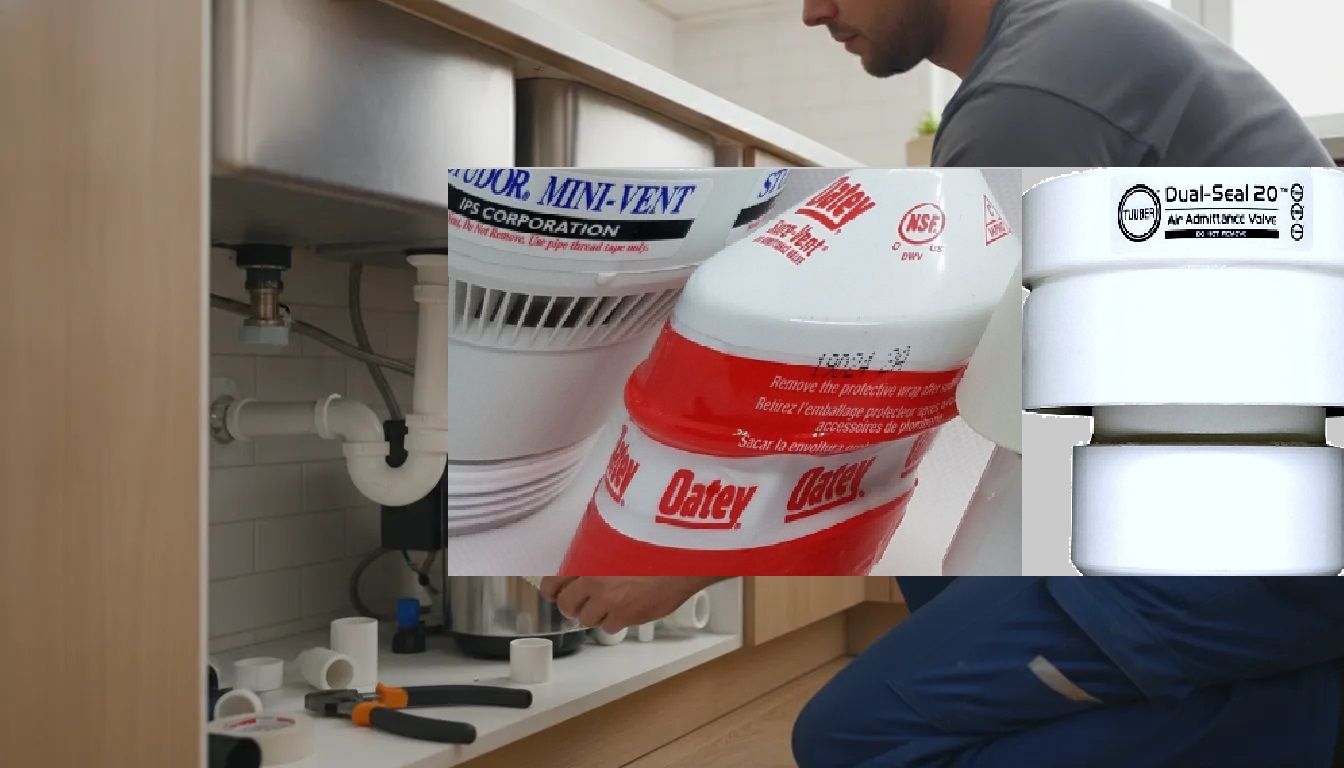
When a dishwasher discharges through the kitchen sink drain, both fixtures depend on the same drainage path and trap protection. The connection must be arranged correctly, and the shared drain still needs a reliable way to admit air when negative pressure develops.
If you are planning a shared kitchen sink and dishwasher drain. Our team can help you confirm whether a vent kitchen sink dishwasher air admittance valve setup fits your layout before you buy or install.
To vent kitchen sink dishwasher air admittance valve systems, connect the dishwasher to the sink drain on the house side of the trap. Then install a properly sized AAV on the sink trap arm or appropriate branch, vertically and in an accessible location. The AAV admits air during drainage to help prevent trap siphoning and sewer gas release.
This approach can be useful where traditional vent piping is impractical, but the drain layout and local requirements determine whether one AAV is appropriate. Compare the design considerations with this air admittance valve vs traditional vent pipe guide before reviewing how the combined drain affects venting.
How a Combined Kitchen Sink and Dishwasher Drain Affects Venting
A kitchen sink and dishwasher often share the same drainage route, but they do not simply empty into an unvented pipe. The dishwasher discharge connects separately to the sink trap or tailpiece, while the sink and dishwasher ultimately drain through a common waste path. That arrangement needs a vent so water can move through the piping without pulling air through the fixture trap.
When the dishwasher pump sends water into the shared drain, the moving discharge can create negative pressure in the pipe. If the system has inadequate or improper venting, that pressure may siphon water from the sink trap. The trap seal is the water barrier that helps keep sewer gases out of the room. Once that seal is reduced or lost, odors and gases can escape into the living space.
Illinois plumbing rules illustrate two important points about this connection. A dishwasher is to discharge separately into the kitchen sink trap or tailpiece, rather than connecting directly to the food waste disposer. When the dishwasher drain connects on the house side of the sink trap, the line is also carried up to the underside of the sink spill rim. See the Illinois dishwasher drain requirements for the cited provisions.
The vent addresses the pressure problem. An air admittance valve opens when negative pressure develops, allowing air into the drainage system instead of drawing water out of the trap. This supports steady drainage and helps preserve the trap seal after the dishwasher cycles. Proper venting is therefore part of both drainage performance and indoor air protection, not an optional add-on.
Traditional vent piping can handle this function, but it may be difficult to route in an island, remodel, or finished kitchen. An AAV can provide an alternative where permitted and correctly installed. Review the air admittance valve vs traditional vent pipe guide before selecting the venting approach for the combined drain.
How to Vent a Kitchen Sink Dishwasher with One Air Admittance Valve
Yes. One air admittance valve can vent both a kitchen sink and dishwasher when the shared drain is configured correctly. The sink and dishwasher should connect to the common waste piping on the house side of the sink trap or tailpiece. The AAV serves the trap arm or appropriate branch. This arrangement allows the valve to admit air when negative pressure develops, helping protect the trap seal from siphoning. See the Tuuber Dual-Seal 20 air admittance valve for an example of a valve designed for under-sink and add-on venting applications.
Ready to choose the right AAV for a shared sink and dishwasher drain?
The AAV does not replace correct drainage connections. The dishwasher discharge still needs its own connection to the sink trap or tailpiece, and local requirements may specify how the drain is routed. For example, Illinois plumbing rules state that a dishwasher should discharge separately into a kitchen sink trap or tailpiece rather than connect to the food waste disposer. A residential dishwasher drain connected on the house side of the trap should rise to the underside of the sink spill rim. Verify the requirements adopted in your jurisdiction before installation.
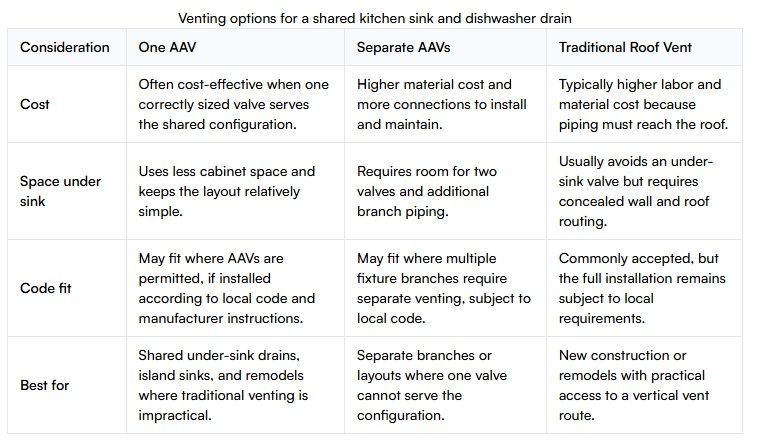
Venting options for a shared kitchen sink and dishwasher drainConsiderationOne AAVSeparate AAVsTraditional Roof VentCostOften cost-effective when one correctly sized valve serves the shared configuration.Higher material cost and more connections to install and maintain.Typically higher labor and material cost because piping must reach the roof.Space under sinkUses less cabinet space and keeps the layout relatively simple.Requires room for two valves and additional branch piping.Usually avoids an under-sink valve but requires concealed wall and roof routing.Code fitMay fit where AAVs are permitted, if installed according to local code and manufacturer instructions.May fit where multiple fixture branches require separate venting, subject to local code.Commonly accepted, but the full installation remains subject to local requirements.Best forShared under-sink drains, island sinks, and remodels where traditional venting is impractical.Separate branches or layouts where one valve cannot serve the configuration.New construction or remodels with practical access to a vertical vent route.
A single AAV is not automatically the right choice for every layout. Keep it accessible, install it in the required orientation and location, and confirm that the shared branch is sized and arranged for the expected flow. When traditional pipe venting is impractical, a correctly configured AAV can provide a simpler, cost-effective alternative without sacrificing trap protection. For a broader look at where this applies, see how to use an AAV for special plumbing configurations.
Code Requirements for Dishwasher Drain Connection and Vent Location
Code compliance depends on both the dishwasher drain connection and the location of the vent. Local rules can vary, so confirm the requirements adopted by the authority having jurisdiction before changing an existing installation.
Connect the dishwasher to the sink drain correctly
Illinois plumbing regulations state that a dishwashing machine must discharge separately into the trap or tailpiece of the kitchen sink. The same provision says the dishwasher drain must not connect to the food waste disposal unit, so do not assume a disposer connection is acceptable everywhere. When a domestic dishwasher connects on the house side of a sink trap, the drain line must be carried up to the underside of the sink spill rim. These requirements help keep wastewater from flowing back toward the appliance. Review the applicable language in the Illinois drainage requirements and verify your local rules.
Place the AAV above the drain and keep it vertical
For a kitchen sink and dishwasher sharing one drain, mount the AAV vertically, within 15 degrees of plumb. Position it at least 4 inches above the horizontal branch drain. This placement gives the valve the operating position and elevation needed to admit air when negative pressure develops in the drainage system. Follow the valve manufacturer's installation instructions as well as the plumbing code that applies to the project. An AAV is not a substitute for ignoring required drain slope, trap-arm, or connection rules.
Leave the valve accessible
Do not bury the AAV behind permanent finishes or place it where an inspector or future owner cannot reach it. Wisconsin rules state that indirect waste piping and local waste piping must be installed to permit access for flushing and cleaning. That principle supports keeping the valve available for inspection and maintenance. An accessible location under the sink is often practical, provided the cabinet layout does not obstruct the valve or restrict its air supply. For more detail, review Tuuber's guide to code-compliant venting requirements.
Tuuber Valves AAVs comply with ASSE 1050 and ASSE 1051. Use a valve appropriate for the application, install it according to the manufacturer's instructions, and confirm acceptance with the local inspector. Correct connection, vertical placement, minimum height, and continued accessibility all matter when venting a shared sink and dishwasher drain.
Step-by-Step: Setting Up an AAV for a Combined Sink and Dishwasher Drain
A combined sink and dishwasher drain needs a clear flow path, a protected trap seal, and an accessible vent point. An air admittance valve opens automatically when negative pressure develops, allowing air into the drainage system without external power. Follow local plumbing requirements and the valve manufacturer's instructions before beginning.
Confirm the drain route and trap arm
Identify the sink trap, the horizontal trap arm, and the branch drain that carries wastewater away from the fixture. Confirm that the dishwasher connection will discharge into the sink's trap or tailpiece arrangement as required by the applicable plumbing code. Do not assume an existing disposer connection is acceptable in every jurisdiction. The AAV must serve the drainage path in a position where it can respond to pressure changes and help prevent loss of the sink trap seal.
Install the AAV vertically on the sink trap arm
Place the AAV on the sink trap arm, above the horizontal branch drain, and keep it within 15 degrees of vertical. Choose a location that remains accessible for inspection and future service, such as the cabinet below the sink. Avoid burying the valve behind a permanently closed wall or placing it where stored items can obstruct the air inlet. For installation details, review Tuuber's guide to installing your air admittance valve.
Connect the dishwasher drain with a high loop
Connect the dishwasher drain to an appropriate wye or sink tailpiece connection. Route the dishwasher hose in a high loop so the discharge line rises before it enters the drain connection. This arrangement helps prevent wastewater from siphoning through the dishwasher line and compromising the sink trap. Keep the connection secure and confirm that the hose is not kinked or restricted.
Check height and clearance
Position the AAV at least 4 inches above the horizontal branch drain and at least 6 inches above insulation. These clearances support proper operation and leave room for inspection. The valve should not be installed below the point it is intended to vent, and it must remain accessible after the cabinet or surrounding enclosure is finished.
Test both fixtures
Run water through the sink, then operate the dishwasher through a drain cycle. Watch each connection for leaks and listen for gurgling, bubbling, or slow drainage. A properly positioned AAV opens automatically during negative pressure and helps maintain the trap seal. Tuuber's patented Dual-Seal 20 design uses a triple-flow-passage configuration, and Tuuber valves include a Limited Lifetime Warranty. If the drain still gurgles or backs up, stop using the installation and recheck the trap arm, hose routing, valve height, and local requirements.
Troubleshooting: Gurgling and Slow Drain After Dishwasher Runs
Gurgling or a slow kitchen sink after the dishwasher discharges usually indicates a restriction, poor venting, or a trap connection disturbed by the shared drainage load. An air admittance valve is a critical part of that system because it admits air when negative pressure develops, helping prevent trap siphoning and support hygienic wastewater disposal. If the drain also produces sewer-gas odors, stop using it until the cause is identified. See how a dual seal air admittance valve prevents sewer gas for the backup-seal advantages of Tuuber's design.
Inspect the AAV and its position
Start with the valve. A single-seal AAV can wear, stick, or fail to close properly over time. Look for a loose connection, visible damage, contamination, or an installation that is below the required position for the branch drain. The valve should remain upright, accessible, and installed according to its manufacturer instructions. A valve buried behind a cabinet wall cannot be inspected or serviced reliably.
Run the sink and then the dishwasher while listening near the valve. If the gurgle occurs as the dishwasher pumps out, the AAV may not be admitting air consistently, or the combined fixture load may exceed the valve's intended capacity. Do not assume a larger valve will correct a clogged drain or an incorrectly configured branch. Confirm the sizing and drainage layout before replacing components.
Check the dishwasher discharge and drain path
Inspect the dishwasher hose, connection, trap, and branch drain for kinks, buildup, or a partial blockage. A dishwasher discharge that siphons the trap, or a shared drain with inadequate flow capacity, can create noise and slow draining even when the AAV itself is working. If cleaning the accessible trap and drain does not improve flow, the obstruction may be farther downstream and should be evaluated by a plumber.
Troubleshooting a shared sink and dishwasher drain before replacing parts. Our team can walk through the likely causes and match a Dual-Seal 20 AAV, which complies with ASSE 1050 and ASSE 1051, to your installation.
When replacement is necessary, Tuuber's patented Dual-Seal 20 design is a durable option for residential and commercial DWV applications. Its dual-seal construction is intended to help protect trap seals from siphoning, odors, and sewer gases. Review best air admittance valves for custom plumbing and follow the selected product's installation instructions. Call a licensed plumber if wastewater backs up, odors persist, the vent route is concealed, or local compliance requirements are unclear.
Frequently Asked Questions
Can I use one air admittance valve for a kitchen sink and dishwasher?
Yes. A single AAV can vent both fixtures when their drains connect correctly to a common waste path and the valve is sized and installed according to local requirements. This approach is useful when a traditional vent route is impractical, but the shared drain layout still needs to protect the sink trap seal.
How do you vent a kitchen sink and dishwasher together?
Connect the dishwasher discharge to the sink drain system on the house side of the trap or through the appropriate sink tailpiece. Then provide a properly located vent for the shared drainage arrangement. Include the required dishwasher high loop or air-gap configuration, and verify the complete layout against local plumbing code and the appliance instructions.
Does a dishwasher need its own vent?
Not necessarily. The dishwasher can share the kitchen sink's vent when both fixtures are connected to a properly configured common waste pipe. It still needs an approved discharge connection. For example, Illinois rules state that a dishwasher must discharge separately into a sink trap or tailpiece. The same code requires a drain connected on the house side of the trap to rise to the underside of the sink spill rim. See the cited Illinois requirements.
Where should an AAV be installed under a kitchen sink?
Install the AAV on the vent branch serving the sink and dishwasher drain, above the branch drain and in a position where air can enter the system freely. Keep it accessible for inspection and future maintenance, rather than burying it behind a permanently closed wall or cabinet panel. Follow the valve manufacturer's installation instructions and local code.
Is an air admittance valve allowed for a kitchen sink?
AAV use depends on the plumbing code adopted in your jurisdiction and the specific installation. Where permitted, the valve must meet applicable requirements and remain accessible. Tuuber Valves states that its AAVs comply with ASSE 1050 and ASSE 1051. Confirm acceptance and placement with the local authority having jurisdiction or a licensed plumber before installation.
Ready to Choose the Right AAV?
A properly selected valve can help support reliable drainage for a kitchen sink and dishwasher sharing a common drain. Choose a Dual-Seal 20 AAV that complies with applicable ASSE 1050 and ASSE 1051 requirements, then confirm the installation follows local plumbing rules and the manufacturer's instructions.