AAV Pipe Flexible Coupling Kit Installation Guide
Get AAV pipe flexible coupling kit installation steps for copper and cast iron. Learn how Tuuber dual-seal AAVs help contractors retrofit existing vent systems.
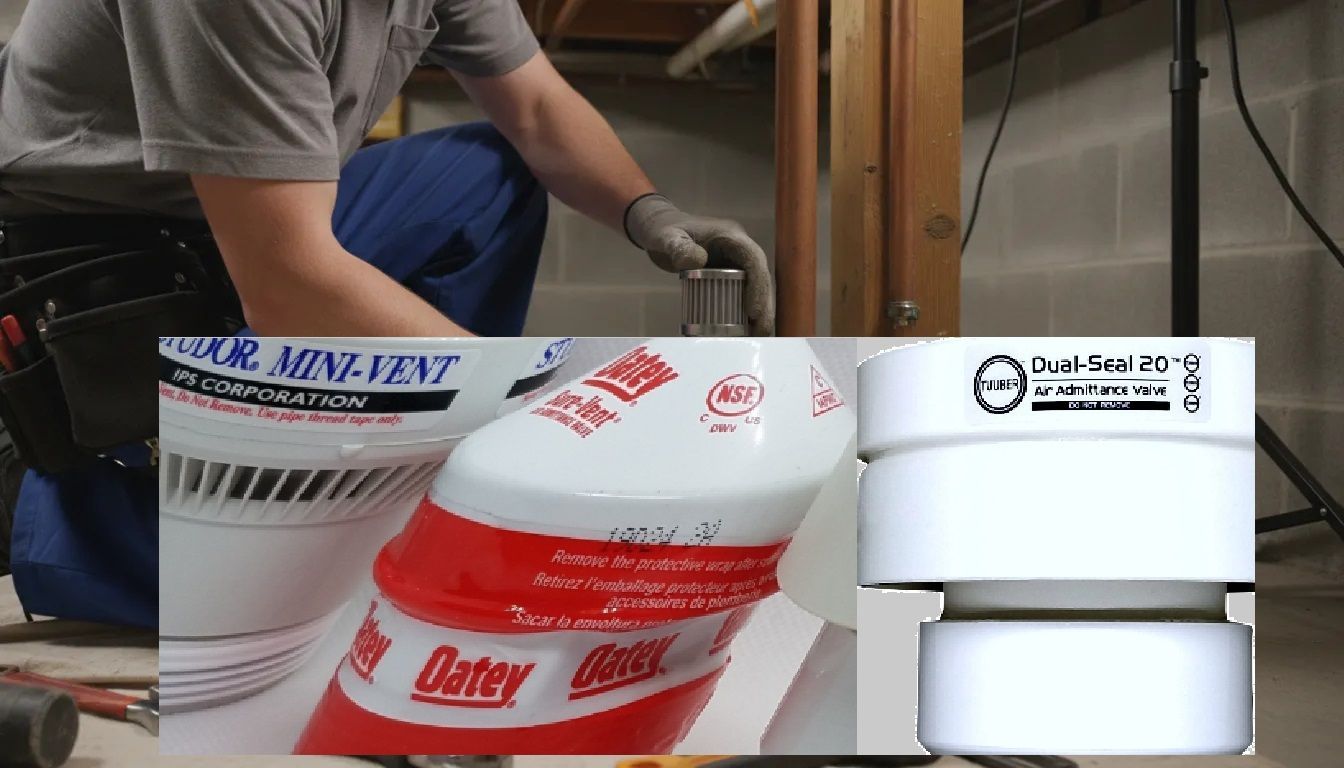
Retrofitting an air admittance valve onto older copper or cast iron DWV piping can be straightforward, but the connection method matters. Existing pipe may not match the valve connection directly, and cutting into a finished system leaves little room for rework. A flexible coupling kit creates a practical transition while helping keep the installation efficient.
An aav pipe flexible coupling kit installation connects an existing copper or cast iron vent configuration to an AAV without requiring a full replacement of the accessible pipe section. The approach can save time during retrofit work, provided the valve is installed in the correct orientation. Remains accessible within the building envelope, and the connection follows applicable local requirements.
Tuuber AAVs are designed for DWV applications that need protection from sewer gas, odors, and siphoning, with compliance claims for ASSE 1050/1051, IPC, IRC, and UPC installations. Before selecting the coupling and beginning the retrofit, it helps to understand why the original pipe material can make a direct AAV connection more complicated.
Aav Pipe Flexible Coupling Kit Installation: Why Existing Pipe Material Complicates AAV Installation
Retrofitting an air admittance valve is straightforward when the drain assembly is already built from compatible PVC components. Older systems often use copper or cast iron, however, and those materials do not connect to PVC with a simple solvent-welded joint. The installer must create a mechanically secure transition while working around fixed pipe, limited clearance, corrosion, or uneven surfaces. That is why an AAV pipe flexible coupling kit installation can be more practical than rebuilding a larger section of vent piping.
A flexible coupling helps bridge the material difference, but the connection is only one part of a compliant retrofit. The valve must be installed in a permitted location, remain accessible within the building envelope, and be sized and positioned for the specific drainage layout. Local requirements can vary, so review the applicable provisions before cutting into an existing system. Tuuber valves are designed to comply with ASSE 1050/1051, IPC, IRC, and UPC requirements for residential and commercial installations. Use the AAV code guide as a starting point, then confirm the requirements enforced in the project jurisdiction.
Why pressure balance matters
An AAV is not merely a substitute cap for an open vent. When negative pressure develops in the drainage system, the valve admits air to balance pressure and help prevent siphonage of the water trap, as described in the International Code Council's AAV CodeNotes. That function helps protect against sewer gas, odors, and siphoning in DWV systems.
Reliability affects the finished job
For contractors, the retrofit method also affects callbacks. Traditional single-seal AAVs are associated with reported failure rates of 15 to 20 percent, making dependable sealing a practical concern. Tuuber's dual-seal design is intended to provide redundant protection against common problems such as debris accumulation. A correctly selected coupling, an accessible installation, and a compliant valve give professionals a cleaner path to a durable repair without replacing sound existing pipe.
What Is a Pipe Flexible Coupling and How Does It Work with an AAV?
A pipe flexible coupling kit is a mechanical connection that joins an air admittance valve to an existing vent pipe without requiring a complete replacement of the pipe run. This makes it especially useful in retrofit work, where the accessible pipe may be copper, cast iron, or another material that does not connect directly to the valve.
Unlike a rigid connection, a mechanical coupling can accommodate limited movement between the joined components. Patent literature describes couplings that permit axial, torsional, and angular deflections between connected pipes. In practical terms, that flexibility helps the connection accommodate small differences in alignment and movement while the AAV is being positioned. See the mechanical coupling patent literature for the technical description.
Bridging dissimilar pipe materials
Older buildings often contain pipe materials that differ from the fittings used in modern venting products. Flexible couplings are used in retrofit applications to join dissimilar materials, including connections where a new AAV must be added to an existing copper or cast iron vent. This approach avoids the unnecessary labor and disruption of re-piping a longer section simply to create a compatible connection. Flexible split ring coupling applications are also documented in an EPA reference.
Matching the AAV connection
Tuuber valves use NPT threads compatible with standard fittings and support 1-1/2-inch and 2-inch vent pipe connections. Select the coupling and related fittings for the actual pipe diameter and material, then follow the product instructions for the connection method and sealing requirements. The kit can save time because it adapts the AAV to the pipe already in place instead of requiring a new copper or cast iron vent section.
The coupling solves the connection problem, but it does not replace installation requirements. Before cutting or securing the assembly, review Tuuber's guidance for installing an AAV, including positioning and accessibility rules. Confirm the completed valve remains accessible within the building envelope and meets the requirements applicable to the project.
Step-by-Step: Installing a Tuuber AAV on Copper Pipe with a Flexible Coupling Kit
A flexible coupling kit makes an AAV retrofit practical when an existing copper vent connection is in place. It avoids unnecessary rework while creating a stable connection for the valve. Use the following sequence, then confirm the finished installation against the Tuuber instructions and the plumbing code governing your location.
- Prepare and measure the copper pipe
- Shut off nearby fixtures and clear the work area. Mark the section of copper pipe to be removed, allowing enough room for the coupling and the NPT adapter. Use a proper tubing cutter to make a clean, square cut. Remove burrs from the cut edges, and wipe away dirt, oil, and oxidation. A smooth, clean surface helps the rubber coupling seat evenly and reduces the risk of leakage.
- Install the rubber coupling
- Slide the flexible rubber coupling over the prepared copper pipe, keeping the stainless-steel clamps accessible. Position the coupling so it has full engagement on the pipe and is not stretched, twisted, or forced to carry the weight of the valve. Tighten each stainless clamp evenly according to the coupling manufacturer's instructions. Do not over-tighten, since excessive force can distort the rubber or damage the connection.
- Attach the NPT adapter and Tuuber AAV
- Connect the appropriate adapter to the coupling and verify that its thread size matches the valve connection. Tuuber AAV configurations use standard NPT connections, including 1-1/2-inch and 2-inch options. Apply thread sealant only as directed for the specific fitting and thread combination. Thread the Tuuber AAV onto the NPT adapter by hand first, then tighten it carefully with the correct tool. Avoid using the valve body as a lever or over-torquing the threads.
- Set the valve position
- Keep the AAV within 15 degrees of vertical so the internal sealing components can operate correctly. Position the valve at least 4 inches above the horizontal branch drain, a common placement guideline cited in AAV installation instructions. The valve must remain accessible within the building envelope for inspection or replacement. If the layout requires a less conventional arrangement, review these special plumbing configurations before closing the wall or cabinet.
- Test the completed connection
- Run water through the connected fixture while inspecting the coupling, adapter, and nearby joints. Check for drips, movement, or air leakage, then repeat the test after the system has drained. The flexible coupling approach is a standard, time-saving retrofit solution for existing copper pipe. Tuuber's dual-seal design also helps prevent debris accumulation failures associated with single-seal designs, supporting dependable operation when the installation is correctly positioned and accessible.
Step-by-Step: Installing a Tuuber AAV on Cast Iron Pipe with a Flexible Coupling Kit
Retrofitting an air admittance valve onto existing cast iron is a practical way to add venting without replacing an entire drain assembly. An AAV pipe flexible coupling kit installation can save time, but cast iron requires more care than newer plastic pipe. The material is heavy and brittle, so plan the cut, support the pipe, and confirm the valve location before starting.
1. Confirm the location and connection size
Choose an accessible location within the building envelope. The valve should remain available for inspection and service, rather than being sealed behind a wall or permanently enclosed. Position the AAV at least 4 inches above the horizontal branch drain, and keep it upright according to the product instructions. Tuuber AAVs use standard NPT connections in 1-1/2-inch and 2-inch sizes, so confirm the existing pipe, adapter, and coupling dimensions before cutting.
For baseline placement details, review the Tuuber guidance on installing an AAV. Local requirements can vary, so also check the air admittance valve code guide before finalizing the installation.
2. Support the cast iron before cutting
Cast iron can shift or drop when a section is removed. Add suitable temporary support on both sides of the planned cut so the remaining drain assembly does not load the new connection. Mark the cut squarely, then use a snap cutter or a reciprocating saw with an appropriate blade. Work slowly and avoid striking the pipe, since sudden impact can crack brittle cast iron or damage nearby joints.
3. Install the flexible coupling and AAV
Clean the cut ends and inspect them for cracks, sharp edges, or damage. A flexible split-ring coupling is designed to join dissimilar materials, making it useful when the cast iron connects to a newer fitting or AAV assembly. Slide the coupling into position, align the connection without forcing the pipe, and tighten it evenly according to the coupling manufacturer's instructions. The rubber sleeve accommodates the larger outside diameter and movement characteristics of cast iron compared with PVC, while the band maintains the joint.
Connect the correctly sized Tuuber fitting and AAV, keeping the valve vertical and accessible. Follow the product instructions for final tightening and inspection. After the drain is back in service, check the coupling and nearby joints for movement or leakage. This standard retrofit approach helps add an AAV to existing cast iron without unnecessary pipe replacement.
When the Flexible Coupling Kit Is the Right Choice vs Standard PVC Connections
Choosing between a flexible coupling kit and standard PVC connections depends on the existing pipe. The amount of preparation available, and whether the installation may need to change later. For retrofit work, the flexible option can connect a Tuuber AAV to copper, cast iron, galvanized pipe, or PVC without forcing the entire connection to match one material. That makes it especially useful when an existing vent line cannot be easily replaced.
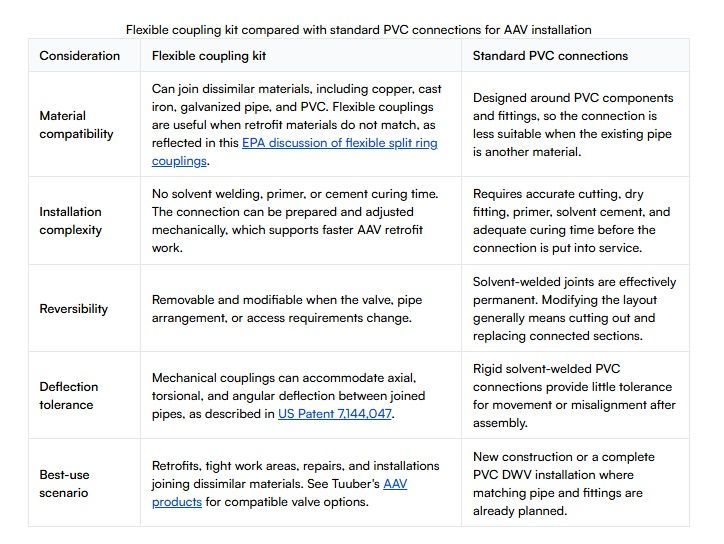
Flexible coupling kit compared with standard PVC connections for AAV installationConsiderationFlexible coupling kitStandard PVC connectionsMaterial compatibilityCan join dissimilar materials, including copper, cast iron, galvanized pipe, and PVC. Flexible couplings are useful when retrofit materials do not match, as reflected in this EPA discussion of flexible split ring couplings.Designed around PVC components and fittings, so the connection is less suitable when the existing pipe is another material.Installation complexityNo solvent welding, primer, or cement curing time. The connection can be prepared and adjusted mechanically, which supports faster AAV retrofit work.Requires accurate cutting, dry fitting, primer, solvent cement, and adequate curing time before the connection is put into service.ReversibilityRemovable and modifiable when the valve, pipe arrangement, or access requirements change.Solvent-welded joints are effectively permanent. Modifying the layout generally means cutting out and replacing connected sections.Deflection toleranceMechanical couplings can accommodate axial, torsional, and angular deflection between joined pipes, as described in US Patent 7,144,047.Rigid solvent-welded PVC connections provide little tolerance for movement or misalignment after assembly.Best-use scenarioRetrofits, tight work areas, repairs, and installations joining dissimilar materials. See New construction or a complete PVC DWV installation where matching pipe and fittings are already planned.
The coupling addresses the connection challenge, while the valve design affects long-term reliability. Tuuber dual-seal AAVs are designed to reduce failure modes associated with debris accumulation and chemical degradation in single-seal designs. Tuuber's technical materials cite single-seal failure rates of 15-20%, making redundant sealing a relevant consideration when selecting an AAV for a retrofit. Always install the valve in an accessible location and follow applicable requirements for the project.
Frequently Asked Questions
How do you install an AAV with a pipe flexible coupling kit?
Choose an accessible section of existing copper or cast iron vent pipe, shut down nearby fixtures, and measure the connection before cutting. Clean and deburr the pipe ends, position the flexible coupling over the prepared connection, and tighten it evenly according to the coupling instructions. Connect the AAV using the correctly sized fitting, keep the valve upright, and confirm that it can be inspected or replaced without opening a wall. Follow the product instructions and local plumbing requirements before putting the system back in service.
Do I need to solvent weld when using a flexible coupling kit?
No. A mechanical flexible coupling is secured with its fasteners rather than solvent cement. It is useful when retrofitting an AAV to existing pipe or joining dissimilar materials, where a solvent-welded PVC connection is not the right connection method. Use the coupling size and configuration specified for the pipe materials, and do not substitute adhesive for the mechanical connection.
What are the code requirements for AAV installation height?
Height and placement rules vary by jurisdiction and by the applicable plumbing code. The valve must remain accessible within the building envelope, be installed in the permitted orientation. And have the required separation above the horizontal branch drain and insulation where those rules apply. Tuuber valves are designed to comply with ASSE 1050/1051, IPC, IRC, and UPC requirements, but the local authority having jurisdiction determines what applies to your installation. Verify the exact requirements before cutting the pipe.
Can I install an AAV on existing cast iron pipes?
Yes. A flexible coupling kit can provide a practical retrofit connection for existing cast iron, including installations where the AAV connection and the original pipe use different materials. Prepare a sound, clean pipe section, select a compatible coupling, and maintain access to the valve. Inspect the finished connection for alignment and leakage before concealing or closing the work area.
Can an AAV correct every S-trap problem?
No. An AAV can admit air to help protect trap seals from siphonage, but it does not replace correcting an improperly configured drain, trap, or waste line. Evaluate the full fixture connection and local code requirements first. If the existing layout has an S-trap or another drainage defect. Correct the underlying configuration when possible and use an AAV only where the application and authority having jurisdiction allow it.
Ready to Find the Right AAV Kit?
Once you have confirmed the pipe material, connection size, and installation requirements, the next step is choosing an AAV solution that fits the retrofit. Browse Tuuber AAV products and find a store near you to review available options for your copper or cast iron application. Find a Tuuber store to get started.